Songjin Weaving Culture Museum: Translating Craft into Spatial Order
/ Project Features / HOUTU ARCHITECTS
About This Feature
Weaving, translucency and layered structure become façades, screens and a rhythm of exhibition rooms.
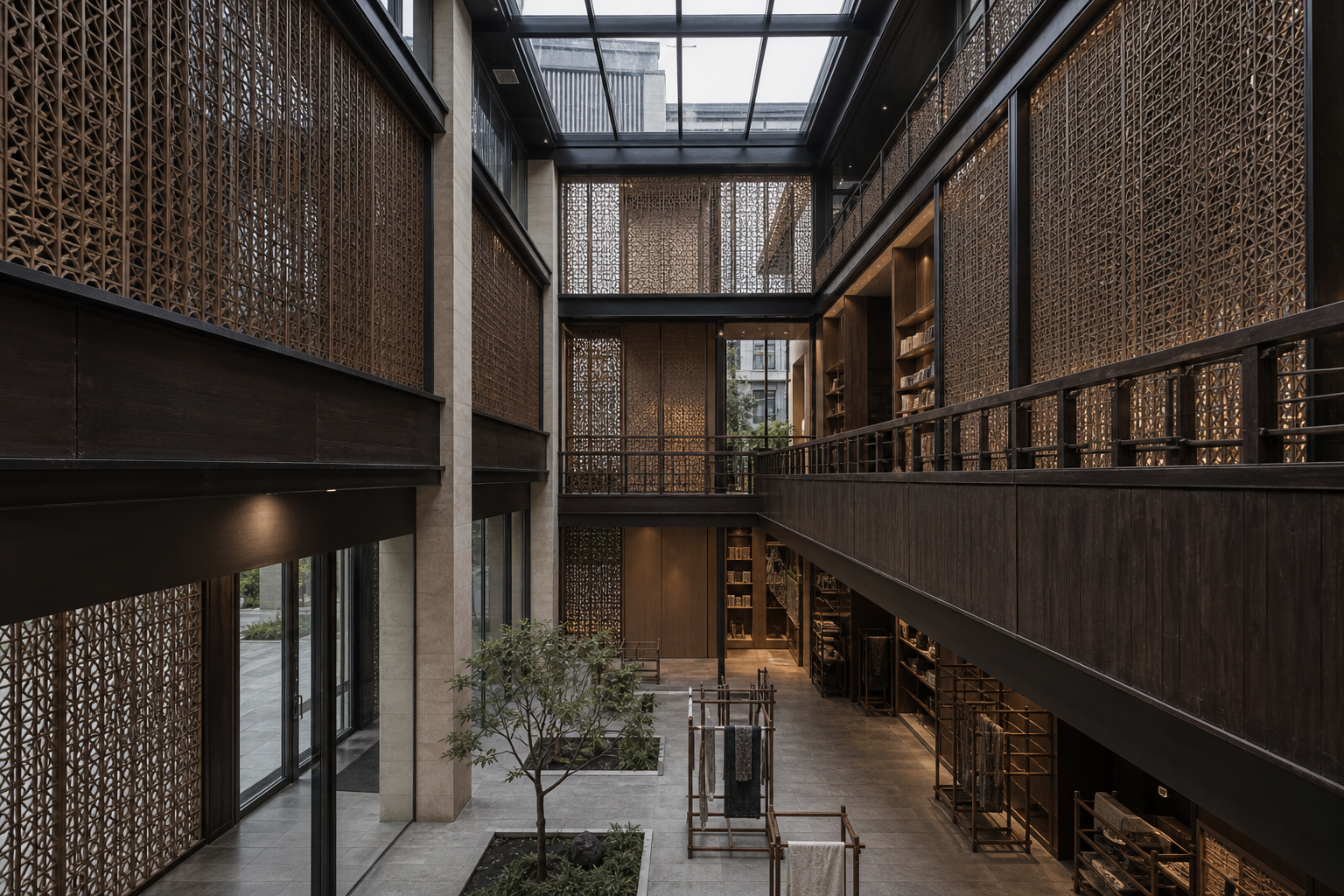
Songjin Weaving Culture Museum begins with the relationship between warp and weft, translating weaving, layering and filtered light into spatial order. Traditional patterns are not simply applied as decoration; the logic of the craft shapes façades, screens, ceilings and displays.
External screens vary in density to control light and views. As visitors move, the perceived pattern changes continuously, echoing woven structure while producing a soft and time-based interior atmosphere.
The exhibition sequence moves from raw material and tools to weaving techniques, pattern systems and contemporary applications. Visitors encounter not only finished textiles, but also the knowledge and labour through which they are made.
Timber, metal, textile and neutral surfaces form a restrained background for the exhibits. Carefully resolved junctions retain a sense of hand-making without allowing the interior to overpower the cultural material.
The museum combines exhibition, research, education and public exchange. Adjustable walls and lighting support temporary shows and workshops, allowing Songjin weaving to enter contemporary design and daily life rather than remain a preserved historical object.